
![Create Your Remote Work Plan — And Communicate It Right Away [Includes Template]](https://images.squarespace-cdn.com/content/v1/500a17fce4b016a023c03626/1586291773339-P678ZSX14PJ2PTVKH0J3/kelly-sikkema-v9FQR4tbIq8-unsplash.jpg)
The following is a template for creating your own letter to colleagues and supervisors about your proposal for working remotely. It’s a tactical approach to handling the basics of your workspace, impacts on your workload and availability. It includes best practices for productivity, collaboration and connection that come from years of experience from remote workers around the world. You could also ‘flip’ this letter if you are a decision-maker on remote work to give people guidelines on what they should expect and do.




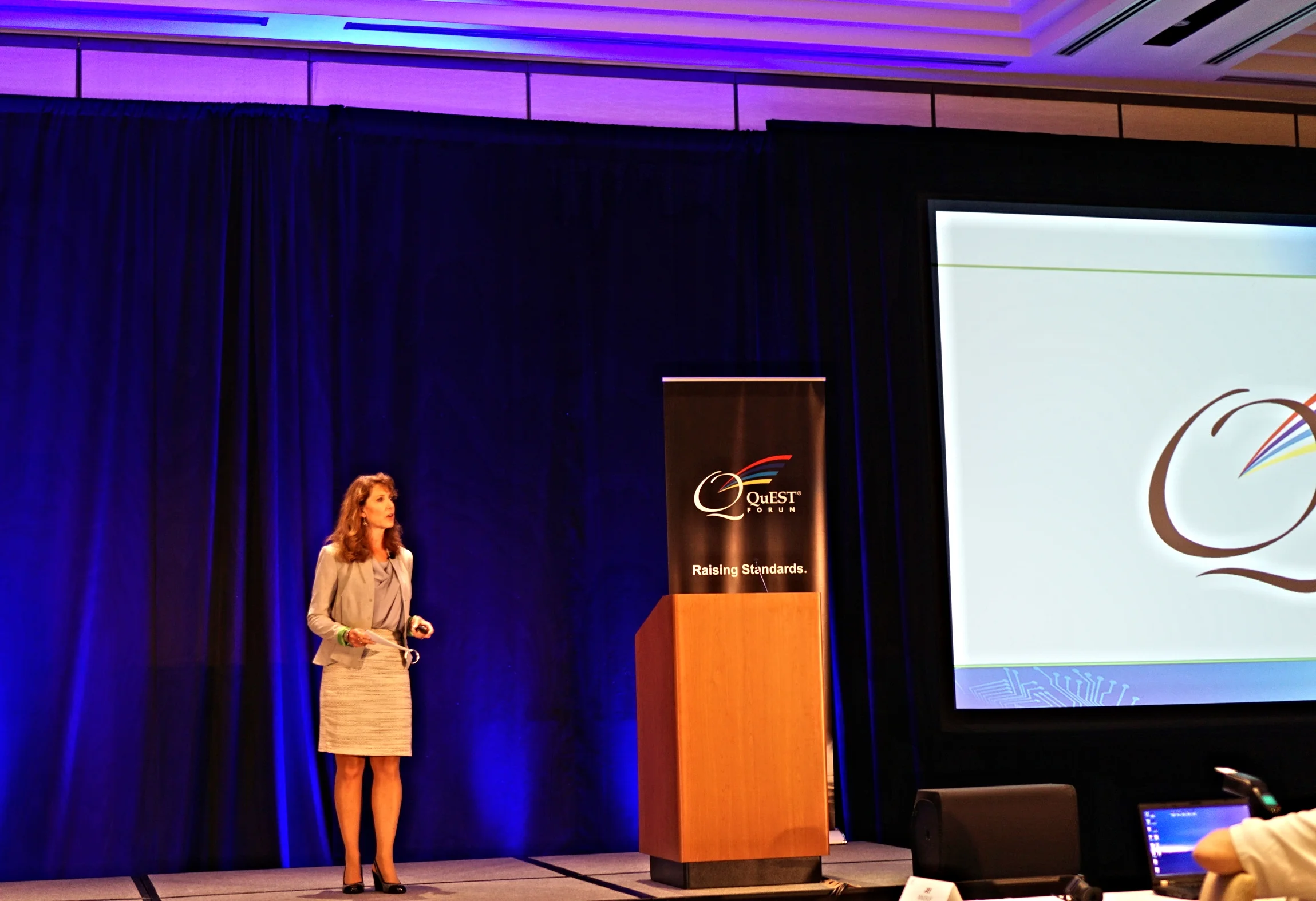
Jessica Long and MJ Petroni of Causeit, Inc talk EULAs and new models for informed consent in a panel discussion on Cyborg Liability moderated by Rita Heimes, Research Director at IAPP at RSA 2016.

What is the cost of not adapting? What are the missed opportunities for health and safety, that if we don't handle them correctly, are actually going to cause other kinds of harm? Is it more important to prevent a few autonomous car accidents, or prevent hundreds of thousands of human driver accidents?

Flipboard aggregates articles from social media and other web sources and displays them in a magazine-like format. It is designed for elegant presentation on the web and mobile devices.

To keep your world view up to date and your brand relevant, one of the most important things you can do is to find, share, and create thought-provoking content. And, in the social media age, you need to make sure that content you’re sending out invites response and dialog too. In order to generate a steady flow of high-quality content you’ll need a plan to keep it both manageable and compelling.

One of the true benefits of reading and watching content online is that it’s easy to share articles, videos, and your ideas about them with your online networks. For busy professionals, this makes it possible to have conversations about what’s happening in your industry and the world at large—and share your unique perspective on it all—without having to find time to write lengthy original content from scratch. It also can make you a valuable partner for colleagues and clients who have information diets and networks that are different from yours.


Excerpted from a transcript of a panel discussion on Cyborg Liability moderated by Rita Heimes, Research Director at IAPP at RSA 2016.
Can you tell us more about the liabilities in a cyborg future?
MJ Petroni: In the future, as we increasingly make augmentations to our bodies—implants, sensors—as we're adopting these cyborg technologies, we're looking at devices that enable people to have better health outcomes, but also technologies that hackers can access, like sending fatal doses to hospital drug pumps.

Automakers are making their own forays into the digital space. Once the domain of third parties, carmakers themselves are getting into the game. Here we briefly look at the strategic partnerships, pilots and internally-led innovations carmakers are working on, as well as new business models for car sharing (wherein multiple parties own one car, or a corporation owns a car and rents it out fractionally, permitting use by a larger group of people).

Digital Disruptors: How Connected Cars Are Creating Pull for Innovation
Friendsurance
What it is: A peer-to-peer ‘social insurance’ company based in Germany that invites customers to opt in to a group policy which is shared between friends.
How it works: Each group policy includes a pool of money, fed by a percentage of each member’s premium, which can be used to pay out small claims. If, at the end of the year, there is money left in the pool, everyone gets their share of the remainder back.
Why it's disruptive: Part of the premiums still go to regular insurance, but the idea of money back each year underwritten by the desire to do right by your friends is an unconventional and attractive value add—especially for people who see in their cultural identity collaboration, community and “pay only for what you use”. In 2013, roughly 90 percent of users who took advantage of the peer-to-peer-insurance model were repaid contributions.

Last week Causeit was excited to attend and present at RSA, the global security conference where 40,000 security geeks descended into the San Francisco bay area to discuss the future of staying safe in an increasingly interconnected world.


1. Post an Article on your News Feed
This may be the quickest way to keep a conversation going with your professional network. LinkedIn has a status update feature similar to other social media platforms like Facebook and Twitter—you can post interesting and relevant articles from the front page by clicking "Share an Update". Then, simply copy and paste the URL of an article you'd like to share, view and approve a thumbnail preview of the link, and add your own commentary in the text box below.
Tip: for each post on LinkedIn you have the option to share with Everyone, Connections (only 1st degree connections) or Everyone + Twitter (which will conveniently push a post to Twitter and draw visitors to your LinkedIn page).

The web and innovation culture have given us access to countless ‘thought leaders’ and inspired us with bold new ways of thinking about what’s possible. Now, organizations and individuals are looking to one another for "thought partnership"—conversations that help them turn inspiration into strategy.

As a small company working with large technology firms, we've learned some difficult lessons about how to navigate the corporate world. As the white, male founder of a firm, but with 'hidden' diversity (all of our current employees qualify as at least one protected class, such as women, members of the LGBT community and/or disabled) I have seen a lot of conversations where people assumed I was one of the old boys' club, and had at least as many where I was definitely not in the 'club.' What I've learned is that mentorship is the second prize: sponsorship is what really matters. I first heard the term 'sponsorship' at the BlogHer Business, Entertainment and Technology conference a few years ago. In contrast to the (useful) mentorship and coaching models, which are mostly about advice in a private setting, sponsorship is the concept of lending or giving tangible and intangible resources to others to help them get a leg up—like reputation, connections, leads, money or access

Recently, we've been getting asked about the differences between many different IoT standards. One of the biggest players is Google—and they've been approaching the world of IoT on many, many fronts. Their early investment in Nest placed them firmly at the front of the pack for the current wave of home automation. But Google has also been working on IoT backbones for many developers to use, in three key ways:

With Apple's recent announcement of their direct sales of not just smartphones, but phone & plan bundles, mainstream customers are about to experience a big, visible change in mobile business models. While lots of articles do a great job comparing Apple's new iPhone Upgrade Plan to similar carrier-specific offerings, there's another issue at hand behind the scenes as Apple closes the loop of the iPhone experience.

In the transition from a tangible business with physical products to one which also has software products and services embedded in everything the business does, some big cultural changes need to happen, and some deeply-held worldviews and mindsets need to shift.
Work in the realm of cyborg anthropology means listening. Rural broadband access is a vital part of lessening the 'digital divide' between the know and known-nots—people who have access to the wealth of information, especially multimedia, on the web.

On Friday June 26th, Causeit CEO MJ Petroni and consultant Jessica Long moderated and presented at Rebel Jam 2015. Rebel Jam is a 24 hour webcast organized by Corporate Rebels United, Rebels at Work, and Change Agents Worldwide.

Causeit is excited to once again participate in Rebel Jam, a 24 hour webcast organized by @petervan's Corporate Rebels United, Rebels at Work, and Change Agents Worldwide. We first met Peter Vander Auwera in his work with @innotribe (a Causeit client), and are glad to support his work of helping the corporate rebels and misfits of the world find the best way to apply their brilliance to pressing global issues.

Most of us think a meaningful event needs to be in person. But in-person meetings are just one way to realize the shared outcomes of gatherings. Even before the COVID-19 pandemic, many organizations were moving away from in-person meetings. Reasons included ecological sustainability, a desire for increased total attendance, the challenges and costs of travel logistics, disruption to regular work, and life/work balance. And right now, with no end in sight, events aren’t getting ‘postponed’ due to COVID-19 — many are canceling altogether.